
10 Common 11+ and 7+ Preparation Mistakes Parents Make (and How to Avoid Them)
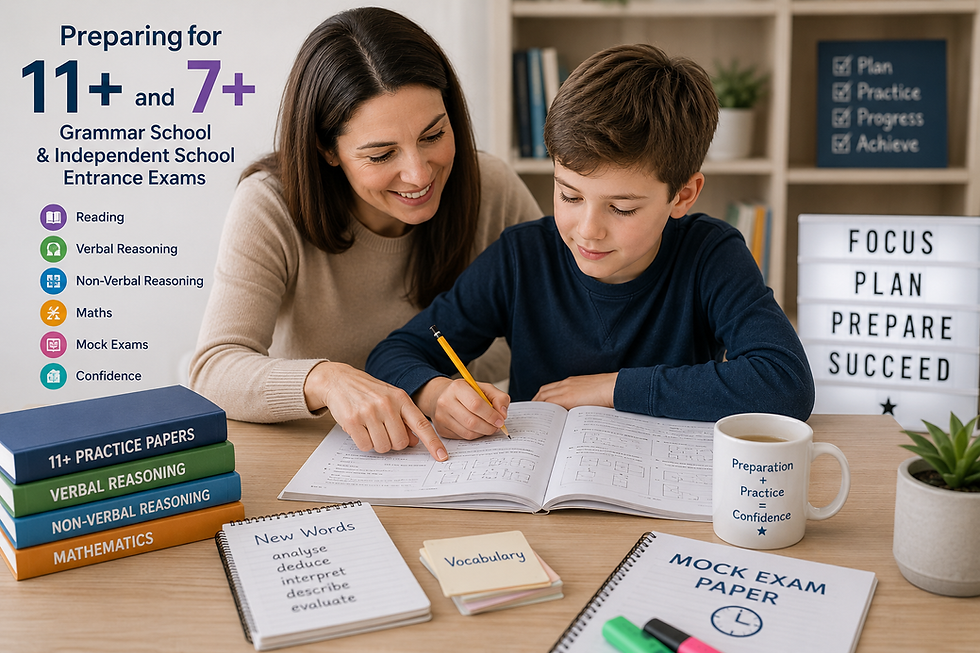
Every year, thousands of children across the UK prepare for the 11+ and 7+ entrance exams in the hope of securing a place at a grammar school or leading independent school. While natural ability plays a part, thorough preparation, good study habits and the right support can make a significant difference.
Many parents unknowingly make mistakes that increase stress or leave their child underprepared. Fortunately, most are easy to avoid.
Here are ten of the most common mistakes—and what you can do instead.
1. Starting Preparation Too Late
One of the biggest mistakes parents make is waiting too long before beginning preparation. The strongest candidates haven't necessarily been tutoring for years, but they have built excellent reading habits, vocabulary and confidence over time.
Preparation doesn't mean hours of tutoring from an early age. It means gradually building the reading, vocabulary, maths and reasoning skills that children need to succeed.
What to do instead
Encourage a daily reading habit from the moment your child begins reading.
Build maths confidence gradually.
Introduce verbal and non-verbal reasoning little by little.
Research local grammar school requirements well before registration opens.
2. Choosing a Tutor Without 11+ or 7+ Experience
Not every tutor has experience preparing children for 11+ and 7+ entrance exams.
Some excellent maths teachers may have little experience of verbal reasoning, while others may not know the specific format used in your area.
Many experienced tutors now teach online, giving families access to specialists regardless of where they live.
Before choosing a tutor, ask:
How many years have you prepared children for the 11+ or 7+?
Which counties do you specialise in?
Do you understand GL Assessment, CEM, and county-specific or school-specific tests?
Can you provide references?
Success Index makes comparing experienced 11+ and 7+ tutors simple, helping parents find specialists in their local area or online.
3. Not Reading Enough
Parents often focus on practice papers while overlooking reading.
Strong readers usually:
have larger vocabularies
understand complex instructions
answer comprehension questions faster
cope better with unfamiliar words.
Aim for at least 20–30 minutes of reading every day. It really does make a massive difference.
4. Doing Too Many Practice Papers
Practice papers are useful—but only when used correctly.
They should be used to measure progress, not as the primary method of learning.
Completing endless papers without reviewing mistakes rarely improves performance. Instead, use each paper to identify gaps in knowledge before moving on to the next one:
analyse every incorrect answer
identify weak topics
revisit those topics before attempting another paper.
Quality beats quantity.
5. Not Building Vocabulary Early
Vocabulary is one of the strongest predictors of success in many 11+ and 7+ exams.
Children who read widely often perform better because they naturally encounter thousands of new words.
Useful activities include:
reading fiction
discussing new words
keeping a vocabulary notebook
playing word games.
6. Comparing Your Child to Others
Every child develops differently.
Some children flourish after six months of preparation, while others need longer.
Comparing your child with classmates or friends often creates unnecessary anxiety.
Focus on steady improvement instead of comparing scores.
Focus on your child's progress—not anyone else's!
7. Not Understanding Your Local Exam
Not every 11+ or 7+ exam is the same.
Different counties and schools assess different skills.
Before beginning preparation, check:
exam format
question types
timings
registration deadlines
grammar school admissions criteria.
Understanding your local requirements can prevent months of preparing for the wrong style of questions.
8. Skipping Mock Exams
Mock exams are about much more than testing knowledge. They also help parents understand how their child performs under timed conditions, making it easier to identify whether further support is needed before the real exam.
They help children:
manage time
experience exam conditions
reduce anxiety
identify weaknesses before the real exam.
Most children improve simply because the real exam feels familiar.
9. Putting Too Much Pressure on Your Child
Children perform best when they feel supported rather than pressured.
Constant reminders about the importance of passing can reduce confidence.
Instead:
celebrate progress
praise effort
keep weekends balanced
make time for hobbies and sport.
A confident child often performs better than a stressed one.
10. Trying to Do Everything Yourself
Many parents spend hours searching for tutors, mock exams, revision materials and grammar school information across dozens of websites.
This can quickly become overwhelming.
Using a trusted directory allows you to compare local tutors, mock exams, resources and schools in one place, saving time and helping you make informed decisions.
Final Thoughts
Successful preparation isn't about doing the most work—it's about doing the right work consistently. Building strong reading habits, choosing experienced tutors, understanding your local exam and maintaining your child's confidence will all contribute far more than endless practice papers or last-minute cramming.
Every child develops at their own pace, so focus on steady progress rather than comparisons with friends or classmates. With the right support and realistic expectations, the journey to grammar school or independent school can be a positive experience for the whole family.
If you're looking for experienced 11+ or 7+ tutors, mock exams, preparation courses, grammar school information or free entrance exam resources, Success Index brings everything together in one place.
Compare trusted providers across the UK, explore local schools and discover the support that's right for your child—saving time and helping you make confident decisions throughout your entrance exam journey.
11+ Preparation FAQs
When should my child start preparing for the 11+?
There is no single "right" age to begin, as every child develops at their own pace. The most successful candidates often build strong reading, vocabulary and maths skills over several years before starting more focused 11+ preparation. Many families begin structured preparation around 12 to 18 months before the exam, but the best approach depends on your child's confidence, ability and the schools you are applying to.
How much tutoring does my child need?
The amount of tutoring varies from child to child. Some children benefit from weekly sessions alongside independent study, while others need very little additional support. A good tutor will identify strengths and weaknesses, provide structured guidance and encourage independent learning rather than relying solely on tuition. Remember that quality of teaching is far more important than the number of hours spent with a tutor.
Are mock exams worth it?
Yes. Mock exams are one of the most effective ways to prepare for the real entrance exam. They help children become familiar with exam conditions, improve time management and reduce anxiety on the day. Mock exams also highlight strengths and areas for improvement, allowing families to focus revision where it is needed most before the actual test.
Is online 11+ tutoring as effective as face-to-face tuition?
For many children, yes. Online tuition offers access to experienced tutors from across the UK rather than limiting you to those in your local area. Many tutors use interactive whiteboards, shared resources and live feedback to create engaging lessons. The best option depends on your child's learning style, confidence and personal preference.
What subjects are included in the 11+ exam?
The subjects tested vary depending on the grammar school or independent school. Most 11+ entrance exams assess a combination of English, mathematics, verbal reasoning and non-verbal reasoning, although some schools set their own papers or include creative writing. Always check the admissions information for the schools you are applying to so your child prepares for the correct exam format.
How often should my child complete 11+ practice papers?
Practice papers should be used to measure progress rather than as the main method of learning. One well-reviewed paper each week is usually more beneficial than completing several without analysing mistakes. The focus should always be on understanding errors, strengthening weak areas and gradually building confidence.


Comments